Closing soon? Call early.
In Nassau, the county Health Department inspection has to be scheduled at least 7 days in advance. Add the time to get an estimate and a spot on our calendar, and "the week before closing" gets tight fast. Call as soon as you know there's a tank.
Remove or abandon?
"Abandonment" sounds like walking away from it. It isn't. It's a proper closure of a buried tank, done in place instead of digging it out. Removal and abandonment are both proper closures. Which one you pick depends on your situation and your preference.
Removal
The tank is dug up, pumped out, lifted out, and hauled away.
- Nothing left in the ground
- More digging, bigger hole to backfill
- Easiest when the tank is in open ground a machine can reach
- Documented with the county
Abandonment
Also called in-place closure. The tank is cut open, pumped out, and filled solid.
- Usually a smaller hole, but the top of the tank still has to be exposed
- An option in its own right, whether or not removal is easy
- A driveway, deck, patio, or slab over the tank may have to be opened up either way
- Documented with the county; an option, not a requirement
Still not sure? Answer five quick questions for our read. We'll talk it through with you and confirm on site either way.
What abandonment actually involves
NYS DEC guidance describes in-place closure like this: the tank is emptied, cleaned, purged of vapors, and filled with an inert solid material such as sand. The fill line is removed or capped. That's the job. Anyone who describes it as just "filling the tank" is skipping the parts that matter.
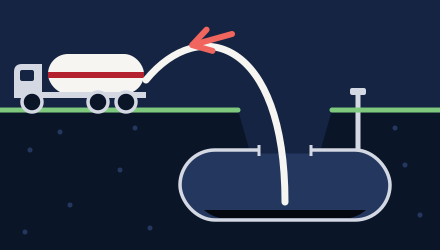
Here's how we do it. We cut the tank open with a reciprocating saw and pump it out completely. Then we fill it with sand. Sand only. Most abandonments take less than a day.
How a tank abandonment works
The buried tank stays in the ground, emptied and filled solid with sand. Most abandonments take less than a day.
 Step 1
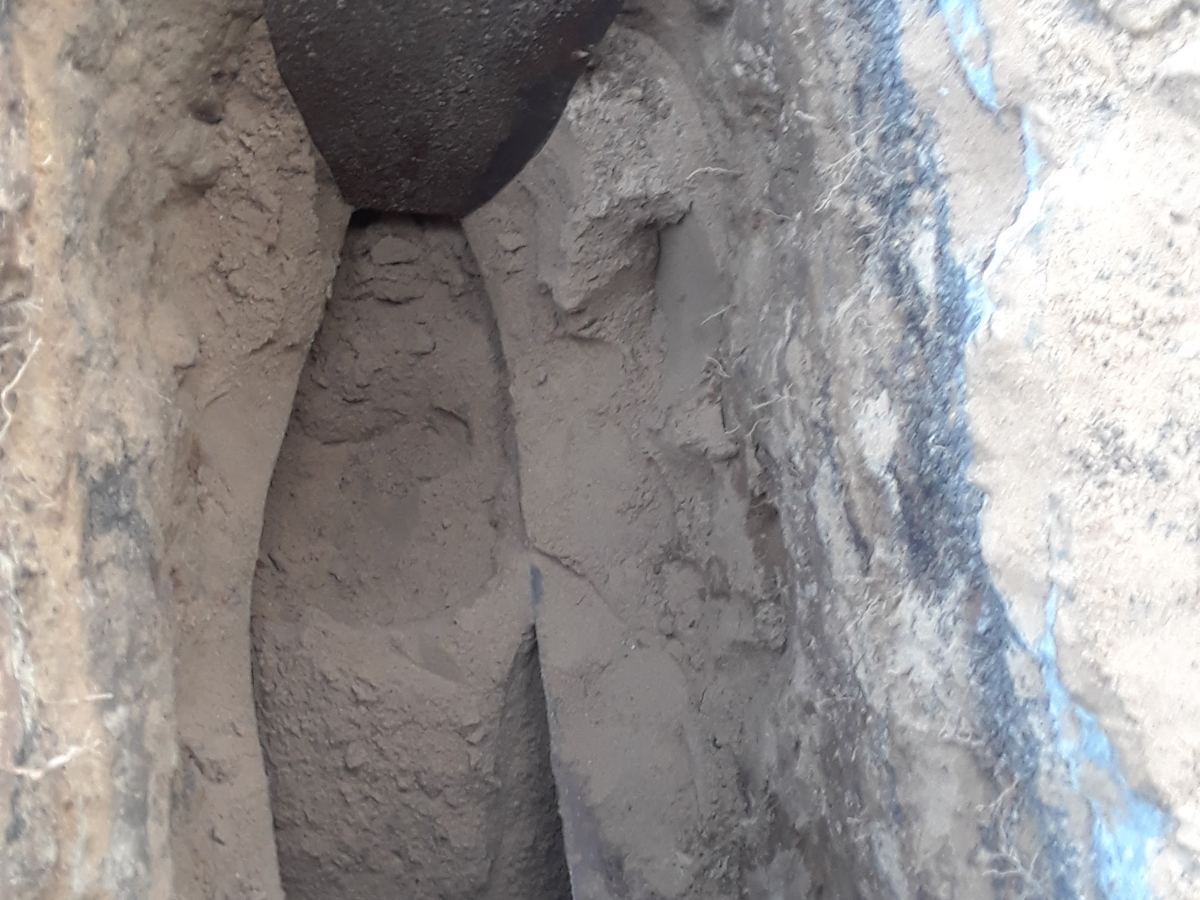
Dig down to the tank
We open the ground just enough to reach the top of the tank.
 Step 2
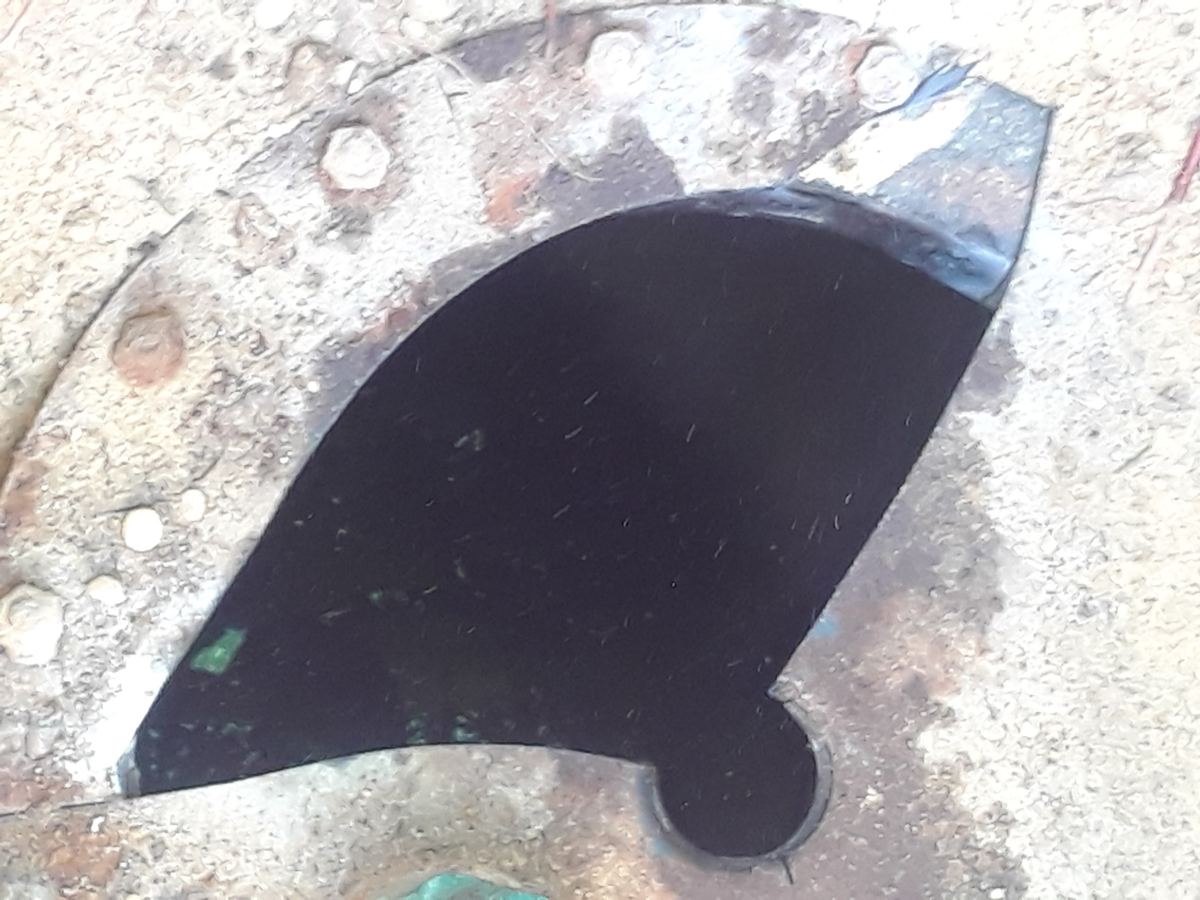
Cut it open
A reciprocating saw cuts an opening in the top of the tank.
 Step 3
Pump it out
Everything inside is pumped out. A certified oil recycling company takes the old oil.
 Step 4
Fill it with sand
The empty tank is filled solid with sand, so there is no hollow space left underground.
 Step 5
Cover it back up
The hole is filled back in and the surface is restored.
 Step 6
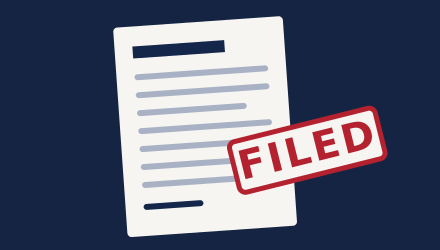
Paperwork filed
E.D. King Inc takes care of all the paperwork and filing with the county. You get a receipt.
Step by step
The work itself is the same in both counties. The county process and paperwork are different. Pick yours.
Nassau County
-
Day 1
Call and free estimate
We look at where the tank is and how we'd get to it, and talk through removal or abandonment with you. We'll tell you what has to come up, what damage to expect, and what repair is included. Then we call you with a price.
-
At least 7 days before the work
Book the county inspection
Small residential tanks go through the Nassau County Health Department's small tank program. The inspection must be scheduled at least 7 days in advance. The county fee is included in our quote. E.D. King Inc takes care of all the paperwork and filing.
-
Check with your town
Your town's building department may have its own requirements. We'll tell you what we know for your town.
-
Job day
Close the tank
- Utilities marked and the top of the tank exposed
- Tank cut open with a reciprocating saw
- Pumped out completely; leftover oil is removed by a certified oil recycling company. Pumping and disposal is a variable cost that isn't known until the tank is pumped, so it's quoted separately from the base price. Water in the tank is contaminated water and carries an additional disposal fee.
- County inspector checks for evidence of a release and that the piping was removed or sealed
- Tank filled with sand
- Fill and vent lines removed or capped
- Ground backfilled and cleaned up
We'll walk you through the order for your job before it starts.
-
After the inspection
Paperwork
We file everything with the county. You get a receipt from us showing it was filed. One to two weeks later, the completed work shows up in the county's online records, where you, your attorney, or your buyer can look it up. The county also issues a verification letter after the inspection. Keep them with your house records.
Suffolk County
-
Day 1
Call and free estimate
We look at where the tank is and how we'd get to it, and talk through removal or abandonment with you. We'll tell you what has to come up, what damage to expect, and what repair is included. Then we call you with a price.
-
County requirements
In Suffolk, closure of residential underground tanks up to 1,100 gallons is governed by county code together with Article 12 of the Suffolk County Sanitary Code. E.D. King Inc takes care of all the paperwork and filing.
-
Check with your town
Your town's building department may have its own requirements. We'll tell you what we know for your town.
-
Job day
Close the tank
- Utilities marked and the top of the tank exposed
- Tank cut open with a reciprocating saw
- Pumped out completely; leftover oil is removed by a certified oil recycling company. Pumping and disposal is a variable cost that isn't known until the tank is pumped, so it's quoted separately from the base price. Water in the tank is contaminated water and carries an additional disposal fee.
- Tank filled with sand
- Fill and vent lines removed or capped
- Ground backfilled and cleaned up
We'll walk you through the order for your job before it starts.
-
After the work
Paperwork
We file everything with the county. Written proof of closure goes on file with the Suffolk County Department of Health Services, and you get a receipt from us showing it was filed. One to two weeks later, the completed work shows up in the county's online records, where you, your attorney, or your buyer can look it up. Keep your receipt with your house records.
What lenders, insurers, and attorneys commonly ask for
No law says you need tank paperwork to sell a house. But buyers' attorneys, lenders, title companies, and insurers commonly ask for proof that an old tank was properly closed. When the paperwork isn't there, closings stall.
What they usually want to see:
- The county document. In Nassau, the verification letter from the Health Department. In Suffolk, the proof of closure filed with the Department of Health Services.
- Proof it was filed. Our receipt showing the work was filed with the county, and the county's online record once it posts, usually one to two weeks after the job.
- Sometimes more. A soil test is sometimes requested at a closing. That's a separate service from ours.
A properly closed and documented tank, removed or abandoned, is a normal part of Long Island real estate. Abandonment is an option, not a requirement, and you get the paperwork either way. More on this in selling a house with an oil tank.
The paperwork you walk away with
With tank work, the paperwork matters as much as the work. When the job is done you should have:
- The county paperwork: Nassau's verification letter, or Suffolk's proof of closure on file with the Department of Health Services.
- Our receipt showing the job was filed with the county. One to two weeks after the work, the completed job shows up in the county's online records, which you or your attorney can look up any time.
- A place to keep them. Put them with the deed. The next person to ask for them may be your buyer's attorney twenty years from now.
Missing paperwork from an old job
This one comes up a lot. The tank was abandoned years ago, maybe by a previous owner, and nobody can find the letter. Here's where to start:
- Check your own closing file from when you bought the house.
- Ask the previous owner or their attorney, if you can reach them.
- Ask the county Health Department whether they have a record for the address.
- Call us. We can look at what's in the ground and tell you what we see.
If the tank leaked
If there's evidence of a leak, the county inspector makes the call on whether the NYS DEC gets involved. We don't do cleanup. We'll tell you what the county said and what the next step is. For reference, the NYS DEC Spill Hotline is 1-800-457-7362. We have no stake in finding a problem.