Two kinds of tank, two kinds of job
Where your tank sits decides almost everything: how the job goes, how long it takes, and what your yard looks like afterward.
Basement, garage, or outdoor tank
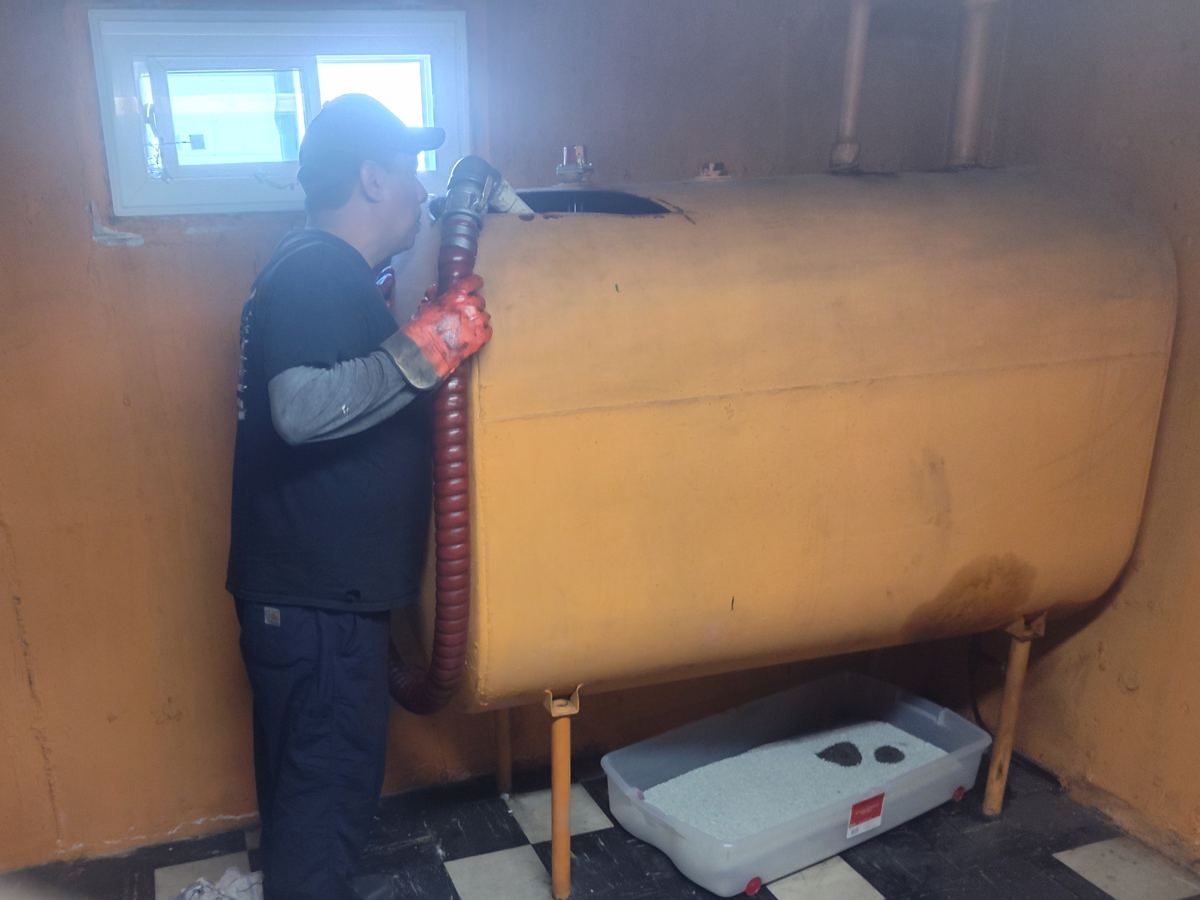
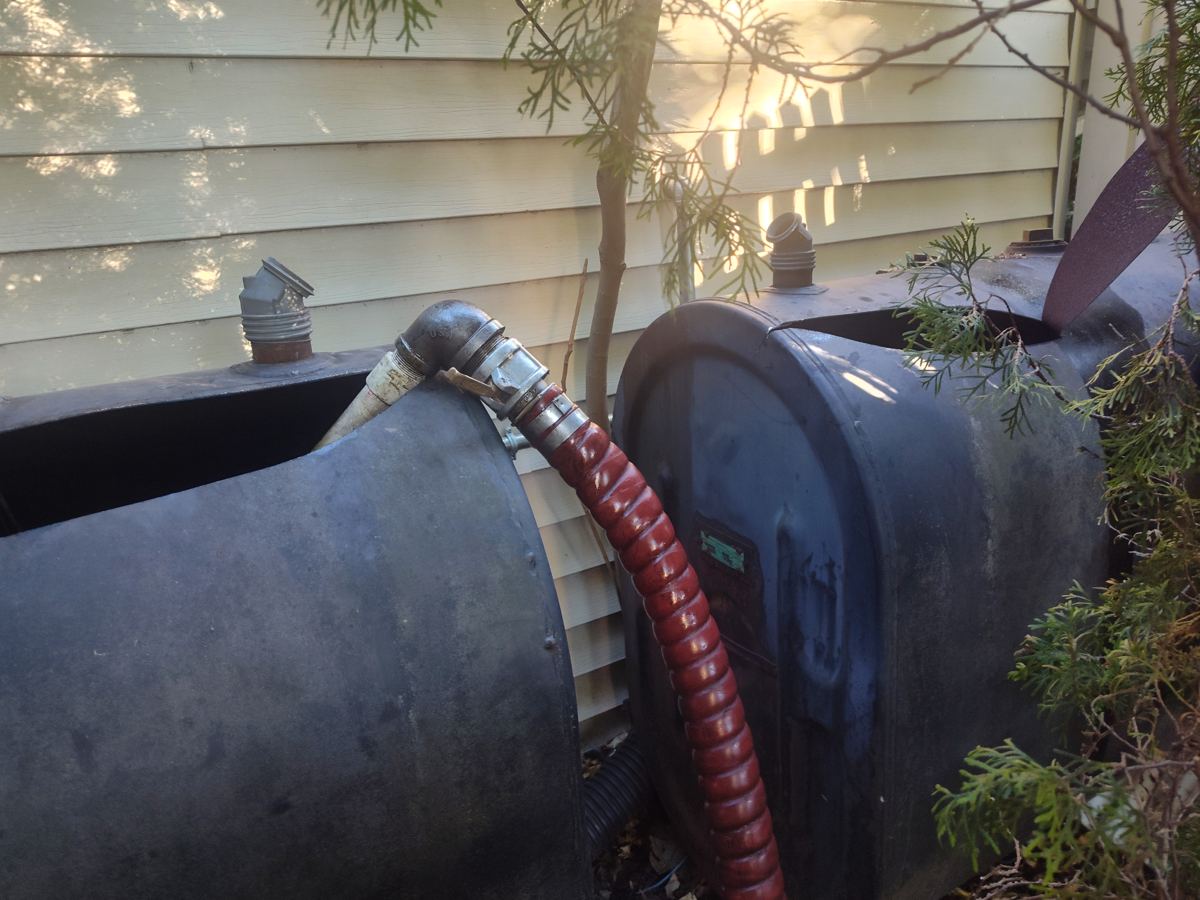
An aboveground tank, the kind you can see and touch. Most are in the basement. Some are in a garage or outside against the house.
- Pumped out, disconnected, and carried out
- Lines capped or removed
- Usually the simpler job
- Nassau County says aboveground tanks should come out when they're replaced or during a gas conversion
Buried tank
An underground tank in the yard, usually near the house, with a fill pipe and a vent pipe coming up out of the ground.
- Dug down to, exposed, and pumped out
- Lifted out and hauled away
- Hole backfilled and the grass or dirt restored
- Abandonment is the other proper closure for a buried tank; which one fits is your call
Not sure which one you have? Here's how to tell. Not sure whether to remove a buried tank or close it in place? Answer five questions.
How a buried tank removal works
The buried tank comes out of the ground and gets hauled away. Nothing is left behind.
 Step 1
Mark the utilities
Underground utility lines are marked before any digging starts.
 Step 2
Dig down and uncover it
We dig down and uncover the whole tank.
 Step 3
Pump it out
Everything inside is pumped out. A certified oil recycling company takes the old oil.
 Step 4
Lift it out
The tank is lifted out of the hole and hauled away.
 Step 5
Backfill the hole
The hole is filled back in.
 Step 6
Restore the surface
Grass or dirt is restored. If the tank was under a driveway, the driveway is patched.
 Step 7
Paperwork filed
E.D. King Inc takes care of all the paperwork and filing with the county. You get a receipt.
Job day, step by step
Here's the usual order. Your job may skip steps (a basement tank involves no digging) or add them. We walk you through yours on the estimate. Most of our jobs take less than a day; removals take longer, and we'll tell you how long yours should take.
-
Before we start
We confirm the date with you. For buried tanks, underground utilities are marked before any digging. If your county needs an inspection, it's booked ahead. In Nassau, that has to be at least 7 days out. E.D. King Inc takes care of all the paperwork and filing.
-
Pump out what's left
Tanks are almost never empty. What's left is pumped out before the tank is opened or moved and removed by a certified oil recycling company. Pumping and disposal is quoted separately from the base price; more on that below.
-
Disconnect the lines
The fill pipe, vent pipe, and supply and return lines to the burner are removed or capped, so nobody can ever pump oil into a tank that isn't there.
-
Get to the tank
A basement tank just needs a clear path out. For a buried tank, we dig down and expose it, then open it up and clean it out.
-
Take it out
Buried tanks are lifted out of the hole. Basement tanks don't always fit through the door they came in, so they may be cut into pieces and carried out.
-
Inspection, where required
In Nassau, the county Health Department inspector checks for evidence of a release and checks that the piping was removed or sealed. Suffolk has its own process under the county code and Article 12 of the Sanitary Code.
-
Backfill and clean up
The hole is backfilled and the grass or dirt restored. If the tank was under a driveway, the driveway is patched. The tank and debris are hauled away and the work area is cleaned up.
-
Paperwork
We file everything with the county and you get a receipt showing it was filed. One to two weeks later, the completed work shows up in the county's online records. More on that below.
What happens to the leftover oil
Before any tank is opened or moved, what's left inside is pumped out and removed by a certified oil recycling company. The cost of pumping and disposal is a variable cost that isn't known until the tank is pumped, so it's quoted separately from the base price. If there is water in the tank, that is contaminated water and carries an additional disposal fee.
Your yard and your driveway
Basement tank: no digging. The work is inside, and the only thing crossing your yard is the tank on its way to the truck.
Buried tank: there will be a hole. It's about the size of the tank plus room to work around it, and it gets backfilled when the tank is out. An abandonment still means opening the ground to reach the top of the tank, so some disturbance or damage is possible either way.
Tank under a driveway, patio, deck, or addition: part of whatever is on top may have to be opened up, for a removal or an abandonment. Before the job, we go over the process with you and tell you what has to come up, what damage to expect, and what repair is included.
The paperwork
If you ever sell the house, somebody will ask how the tank was closed. We file everything with the county. You get a receipt from us showing it was filed, and one to two weeks later the completed work shows up in the county's online records, where you, your attorney, or a buyer can look it up. Keep the receipt with your house records.
- Nassau County: small residential tanks go through the county Health Department's small tank program. The inspection has to be scheduled at least 7 days ahead. The county fee is included in our quote. After the inspection, the county issues a verification letter.
- Suffolk County: closure of residential underground tanks up to 1,100 gallons is governed by county code and Article 12 of the Suffolk County Sanitary Code. Written proof of closure is filed with the Suffolk County Department of Health Services.
- Your town: your town's building department may have its own requirements. We'll tell you what we know for your town on the estimate.
Selling soon? Read selling a house with an oil tank.
If the tank leaked
We don't do cleanup, and we don't sell it. If there's evidence of a leak, the county inspector makes the call on whether the NYS DEC gets involved. We'll tell you what the county said and what the next step is. For reference, the NYS DEC Spill Hotline is 1-800-457-7362.
Because cleanup isn't our business, we have no reason to go looking for a problem.
Bigger tanks and commercial tanks
New York regulates petroleum tanks under 6 NYCRR Part 613. Residential heating oil tanks up to 1,100 gallons are generally outside the state registration program, and Nassau and Suffolk run their own county programs for them. Larger tanks and commercial tanks can fall under different rules. Call us and tell us what you have.